
 Novel
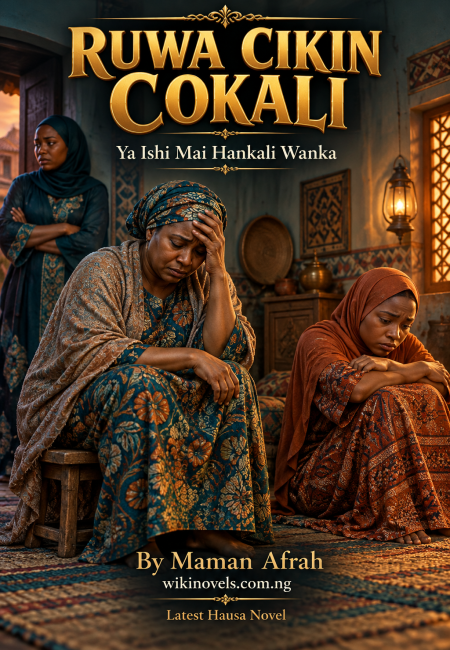
RUWA CIKIN COKALI ( Ya Ishi Mai Hankali Wanka) by Maman Afrah Latest Hausa Novel
Please login or register to access this premium novel.
NovelPlease login or register to access this premium novel.
(Ya Ishi Mai Hankali Wanka)
By Maman Afrah
What happens when a father sees the birth of daughters as a disappointment, while the women around him struggle to protect their children from the consequences of his decisions? And what happens when a woman trapped in an unhappy marriage seeks comfort from the very family that once encouraged her to marry?
RUWA CIKIN COKALI (Ya Ishi Mai Hankali Wanka) by Maman Afrah is a Hausa family drama that explores the struggles of women, difficult marriages, family responsibilities, and the pain of being treated unfairly. Through the lives of Zalika, Sadiya, and Jidda, the story takes readers into a world of family conflict, emotional suffering, and the challenges women face both inside and outside their homes.
Malam Bala is a man deeply disappointed by the fact that he has daughters instead of the son he desperately desires. He makes his feelings known through his harsh words and unfair treatment of his family. His wife, Mama Habiba, constantly suffers his insults because she has not been able to give him a male child. Although she believes that having children is determined by Allah, her husband's repeated humiliation causes her deep emotional pain. Mama Talatu also witnesses his behaviour and tries to remind him that daughters are blessings too, but her attempts to correct him often end in arguments.
Malam Bala's attitude affects his daughters in different ways. Rather than taking proper responsibility for their needs, he believes that girls should eventually marry and become their husbands' responsibility. He even gives them a bitter herbal mixture that he claims will improve their attractiveness to potential husbands, forcing them to drink it despite their complaints about its taste and the discomfort it causes. His obsession with marrying them off overshadows their well-being and leaves the young women living under constant pressure.
The family also faces tension over basic responsibilities and the treatment of its daughters. Aisha returns home crying after experiencing embarrassment at school, but instead of receiving the comfort she needs, she faces criticism from her father. Mama Talatu shows sympathy and understands the difficulties girls encounter as they grow up. She also questions the family's refusal to provide essential items for the girls, including sanitary pads. Her concerns reveal how difficult everyday life has become for the daughters, who are expected to manage their own needs despite still depending on their parents.
Another painful situation emerges through Sadiya, also known as Halima, who is married to Nasir. Although her marriage may appear successful to others, she is privately suffering. She visits her mother, Mama Talatu, in tears, hoping to share the difficulties she experiences in her husband's home. However, her mother repeatedly advises her to be patient because she fears that the failure of Sadiya's marriage would bring shame and disappointment to the family. Sadiya feels unheard and wonders why her suffering is never taken seriously.
Sadiya's situation becomes even more complicated when she explains that life in Nasir's home feels like imprisonment. She describes the humiliation and mistreatment she endures, while her young son, Kalifa, becomes part of the difficult circumstances surrounding her visit. The arrival of Sumayya brings further conflict, as her disrespectful behaviour creates tension between the women. Through these family encounters, the story begins to reveal the struggles, misunderstandings, and painful experiences that connect the lives of its central female characters.
Zalika: One of the three major female characters whose story forms part of the novel. Her full circumstances are not yet revealed in the supplied opening pages.
Sadiya (Halima): A married woman experiencing serious difficulties in her marriage to Nasir. She has a young son named Kalifa and struggles to make her mother understand the pain she is going through.
Jidda: One of the three central female characters introduced by the author. Her story is yet to be revealed in the supplied pages.
Malam Bala: A father whose strong preference for a male child influences how he treats his daughters and wife.
Mama Habiba: Malam Bala's wife, who suffers repeated insults because she has not given birth to a son.
Mama Talatu: A compassionate woman who sympathises with the daughters and tries to speak against the unfair treatment they receive. She is also Sadiya's mother.
Mama Bilki: A mother who appears in the family household and is involved in the conflicts surrounding the children.
Sumayya: A young woman whose disrespectful behaviour creates tension with the older women in the family.
Nasir: Sadiya's husband, whose treatment of her is a major source of her unhappiness.
Kalifa: Sadiya's two-year-old son.
Aisha: One of the daughters who returns home upset after being embarrassed at school.
Readers can expect a family-centred story filled with emotional struggles, difficult relationships, disagreements, and the realities of married life. The novel introduces different experiences of womanhood, from the pressure placed on daughters in their parents' home to the suffering some women endure after marriage.
With Zalika, Sadiya, and Jidda each having an important part to play, the story promises several connected experiences and perspectives. Their individual journeys gradually open the door to a wider picture of family life, marriage, and the challenges women face.
Read RUWA CIKIN COKALI by Maman Afrah to follow the stories of Zalika, Sadiya, and Jidda.


